

Eco-anxiety, a term that has gained prominence over the past decade, is affecting populations across all demographics. Personally, my eco-anxiety has reached an all-time high as I witness the effects of climate change—global heatwaves, the increasing frequency and intensity of wildfires, and disrupting water resources through altered precipitation patterns and reduced snowpack. Feelings of rage, anger, fear, and deep grief wash over me when I think about how the futures of my child and young niece and nephew will be starkly different from my own, and especially from that of my parents, according to scientific projections. Yet, amidst these overwhelming emotions, I cling to a thread of hope: education for sustainability.
More schools and classrooms around the world are calling themselves green, environmental, or sustainable. With that in mind, I’ve compiled a list of fundamental elements for an effective sustainable education program. While there are many pedagogies and approaches, I have narrowed it down to six key areas:
Interdisciplinary Content and Skills
Students need to understand the complex content behind today’s “wicked problems”—what’s happening, why it’s happening, and both current and proposed solutions. Teaching climate change and other pressing environmental issues must be tailored to the age group of the students, ensuring they can grasp the content without being overwhelmed.
While environmental issues are often taught in science classrooms through a scientific lens, we do a disservice to students by limiting our focus there. Climate change is a human issue—caused, accelerated, and felt by people. As such, it should be explored beyond science. Our world is interconnected, interdependent, and interrelated, and students must be prepared to see the interconnections within global issues to become responsible citizens equipped to solve complex challenges. Theme-based learning is an effective way to approach interdisciplinary education, and you can explore more about how I incorporate it into my classroom.
Systems Thinking
Systems thinking and interdisciplinary thinking are deeply intertwined. We cannot effectively teach one without the other. Systems thinking empowers students to become creative, effective problem solvers, enabling them to move beyond surface-level solutions to achieve real, impactful change.
Students who adopt a systems thinking mindset can see the broader picture, recognizing how different parts of a system interact, how changes in one area ripple across the whole, and how both short- and long-term consequences arise from any action. To introduce systems thinking, I often start with the Iceberg Model, which helps students delve beneath the surface of an issue and fully grasp the big picture. For example, when learning about global plastic pollution, my students examine each step of the supply chain and uncover the root causes behind the pollution, making them more aware of the interdependencies at play.
I highly recommend educators use the resources from the Waters Institute for Systems Thinking. Their materials are accessible and practical for classroom use, making it easier to integrate systems thinking into lessons. Particularly useful are their “Habits of a System Thinker,” which provide a foundational framework for teaching students how to analyze and approach problems with a systems perspective. These resources facilitate the development of critical thinking skills and encourage students to become effective problem solvers, capable of creating meaningful and lasting change in their communities.
Hope Through Climate Action Tools and Mindfulness
As we teach students about heavy topics like climate change or plastic pollution, it’s crucial to balance the doom and gloom with stories of hope and action. Children need role models and spaces where they can envision alternatives. I am always amazed by the creativity and imagination of children, who, unlike adults, don’t get stuck in “what-ifs” but stretch their thinking to imagine new possibilities.
We must also equip students with the skills to take real, authentic action. Design thinking allows students to root their actions in empathy, applying their knowledge to create real-world change while honing critical thinking, creativity, collaboration, and communication skills. Action helps combat the frustration and anger that often accompany learning about the state of the planet.
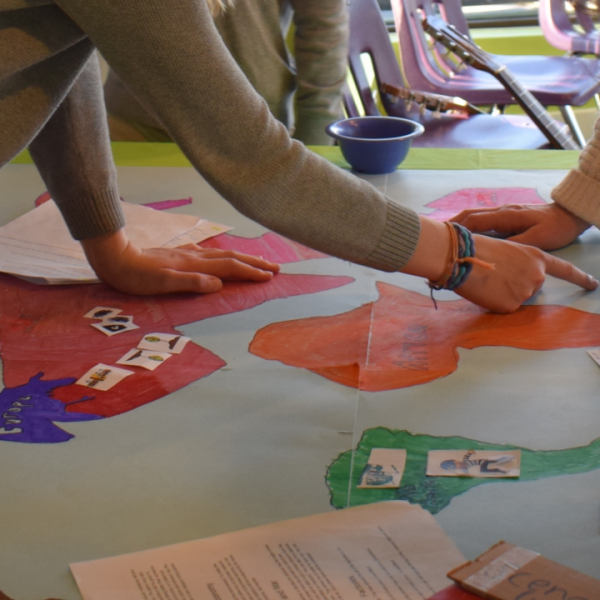
Additionally, providing space for students to explore and express their emotions—through poetry, spoken word, or other forms of writing or art can be immensely powerful. Sharing their thoughts with an audience empowers them to influence others and process their feelings. For example, my students wrote original slam poetry inspired by climate change and the Amazon Rainforest, and showcased their work by performing their poems to their parents during a poetry slam event. Mindfulness tools can also be introduced, offering students strategies to manage the overwhelming emotions they may experience as they engage with environmental crises.
Indigenous Ways of Knowing and Thinking
A truly sustainable education must also be built on the foundation of Indigenous ways of knowing and thinking. Indigenous cultures have long understood the interconnectedness of all living things, the land, and the natural world. These perspectives emphasize balance, reciprocity, and long-term stewardship, which are critical for addressing today’s environmental challenges. Indigenous communities have practiced sustainable living for generations, offering invaluable knowledge and solutions to climate change.
By integrating their holistic approaches into the classroom, we empower students to view environmental problems through a more inclusive lens—one that considers the wellbeing of the entire ecosystem, rather than focusing on isolated elements. Indigenous wisdom highlights the importance of restorative practices, where human activities are aligned with the cycles of nature, providing students with alternative models for rethinking the human impact on the environment.
This way of thinking challenges dominant narratives around resource extraction, land use, and development, offering students a richer understanding of sustainability that is rooted in respect for the Earth. By teaching Indigenous perspectives, we not only honor these traditions but also equip students with tools for creating climate solutions that are deeply informed by principles of equity, balance, and reciprocity.
Intersectionality, Privilege and Accessibility
Incorporating intersectionality into sustainability education ensures that we address the multiple layers of identity—race, gender, class, ability—that shape how individuals experience climate change and environmental issues. This approach fosters empathy and awareness in students, encouraging them to recognize the varying impacts of climate crises across different communities.
Intersectional thinking pushes students to see beyond their own circumstances and understand that not all people have equal access to resources or opportunities for adaptation and resilience. It also helps students understand the systemic inequalities that worsen climate impacts for marginalized groups. When intersectionality is a core part of sustainability education, it promotes social justice and encourages students to work toward solutions that are fair and inclusive.
Outdoor Education: Connecting Kids to Nature
Outdoor education is vital for fostering a meaningful connection between children and the natural world. By immersing students in natural settings, we provide them with firsthand experiences that enhance their understanding of ecological concepts and inspire environmental stewardship.
Engaging with nature through outdoor activities helps students grasp complex environmental issues in a tangible way. This hands-on approach not only makes learning more engaging but also nurtures a sense of responsibility toward preserving the environment. Activities like exploring local habitats or observing wildlife make abstract concepts more concrete, encouraging students to see the practical implications of their actions.
Additionally, outdoor education supports students’ physical and mental well-being. Time spent in nature reduces stress, improves focus, and promotes overall health. By experiencing the beauty and intricacy of the natural world, students are more likely to develop a lasting commitment to environmental conservation.
In a world where the challenges of climate change can feel overwhelming, both for educators and students, it’s important to remember that education for sustainability isn’t about teaching everything at once; it’s about creating connections, fostering hope, and empowering the next generation to think critically and act compassionately. While it can seem daunting to integrate these ideas into an already full curriculum, sustainability education offers an opportunity to instill in students a sense of responsibility, creativity, and resilience. By embracing interdisciplinary learning, systems thinking, Indigenous knowledge, intersectionality, and outdoor learning we can inspire our students to become thoughtful, engaged citizens capable of driving meaningful change for a better future.
 Katelyn Jmaeff's Blog
Leave a comment